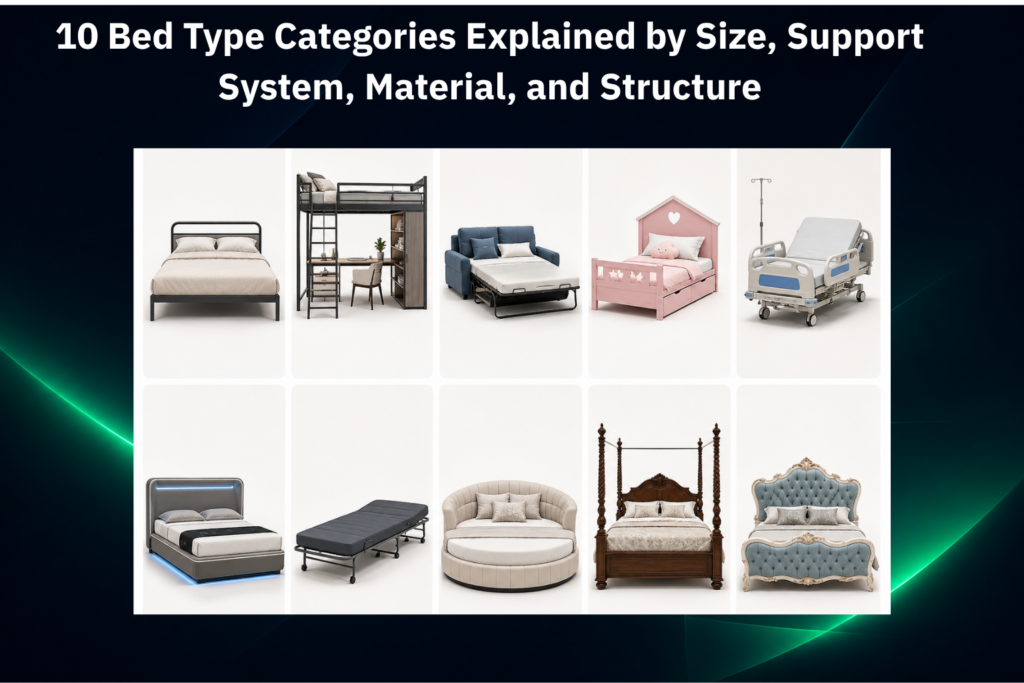
10 Bed Type Categories Explained by Size, Support System, Material, and Structure
The 10 main bed type categories can be distinguished by four practical classification factors: size, support system, material, and structure, which together explain how each bed is built, how it functions, and where it fits best.
This guide uses 10 bed categories as its primary classification system: Standard, Space-Saving, Convertible, Kids, Medical, Smart, Portable, Specialty, Traditional, and Decorative Beds. It first identifies the complete taxonomy, then compares every category through the same four cross-category attributes so you can move from classification to a practical buying decision.
These bed categories can overlap because one design may serve more than one purpose. The dominant purpose determines the primary category, while size, support system, material, and structure describe the configuration rather than creating additional top-level bed types.
The 10 Bed Type Categories Covered in This Guide
The 10 bed type categories covered in this guide are Standard, Space-Saving, Convertible, Kids, Medical, Smart, Portable, Specialty, Traditional, and Decorative beds.
- Standard Beds
- Space-Saving Beds
- Convertible Beds
- Kids Beds
- Medical Beds
- Smart Beds
- Portable Beds
- Specialty Beds
- Traditional Beds
- Decorative Beds
A taxonomy is an organized classification system used to group related entities according to shared defining characteristics. This 10-category system is the approved Bedlufix editorial taxonomy for organizing bed choices; it is not presented as a universal furniture-industry standard.
Individual beds may display attributes of more than one category. A Smart Medical Bed, Convertible Space-Saving Bed, Kids Space-Saving Bed, or Traditional Decorative Bed should be classified by its dominant purpose, user group, technology, mobility, cultural form, functional configuration, or visual role.
These categories become easier to compare once each is evaluated through the same four classification factors.
Why understanding bed type categories matters for your sleep quality
Understanding bed type categories matters for sleep quality because each category can create different support, positioning, mattress-compatibility, and comfort conditions while also affecting room fit, functionality, and intended use. A sleep surface is the mattress and supporting configuration that directly influences the sleeper’s physical support and comfort during sleep.
A 2021 systematic review by Caggiari and colleagues in the Journal of Orthopaedics and Traumatology included 39 articles and found that medium-firm mattress support was associated with comfort, sleep quality, and spinal alignment. The evidence supports a narrow conclusion: bed configuration matters when it changes the support surface, positioning, mattress compatibility, or comfort conditions.
A 2022 field study reported in SLEEP tracked more than 1,100 nights across 26 participants. Adjustable-base use was associated with 21 more minutes of total sleep and 5 more minutes of measured REM than baseline, but the study used a pre-post design and received support from Mattress Firm, so it should not be generalized to all adjustable beds or sleepers.
- Rule: Match the bed type to the primary sleep or room requirement.
- Reason: A mismatch can create support, access, positioning, mattress-compatibility, or room-fit problems even when the bed category itself is reasonable.
- Example: A rigid Traditional Bed may suit a fixed bedroom setup, while an adjustable Smart or Medical Bed configuration is more appropriate when controlled positional adjustment is the actual need.
The first step is identifying the full set of bed categories before comparing the factors that distinguish them.
How to classify a bed type using size, support system, material, and structure
A bed type can be classified consistently by examining four fundamental characteristics: its size, support system, material, and structure. A support system is the base or foundation that supports the mattress and transfers load through the bed structure. The four factors describe each bed category but do not replace the 10-category taxonomy.
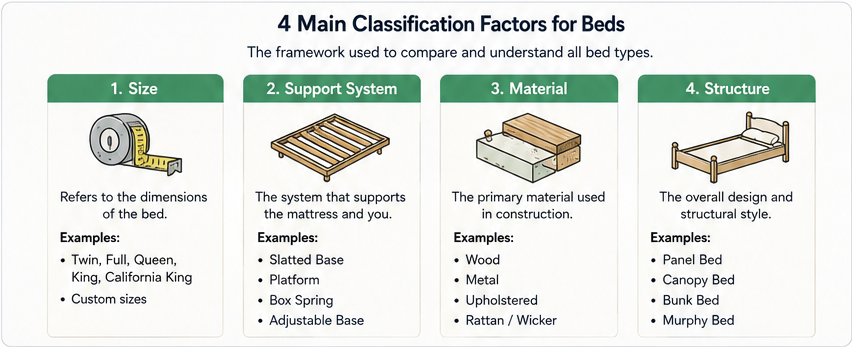
Size. Size defines the mattress dimensions, sleeper capacity, and physical footprint associated with a bed configuration. Common labels such as Twin, Queen, and King identify dimensional options rather than top-level bed categories.
Because each bed category can use different mattress dimensions, compare bed size and dimensions before evaluating the remaining factors.
Support System. Support system defines the base or foundation beneath the mattress. The Sleep Foundation mattress glossary identifies common bases such as box springs, foundations, platform beds, slatted bases, and adjustable bases, with final compatibility depending on the mattress and frame.
Material. Material identifies the primary construction materials used in the bed, including solid wood, engineered wood, metal, or upholstery. Material influences construction properties, maintenance, weight, and appearance without defining the bed’s top-level category by itself.
Structure. Structure describes the physical configuration and functionality of the bed, including fixed form, adjustability, conversion, portability, storage interaction, or another intended structural purpose.
These four fundamental classifications form explicit relationships: size determines physical footprint; support system determines mattress foundation; material influences construction properties; structure determines functional configuration.
Applying these four criteria to the same taxonomy makes the differences between the 10 bed categories visible and comparable.
Compare the 10 essential bed types for your home
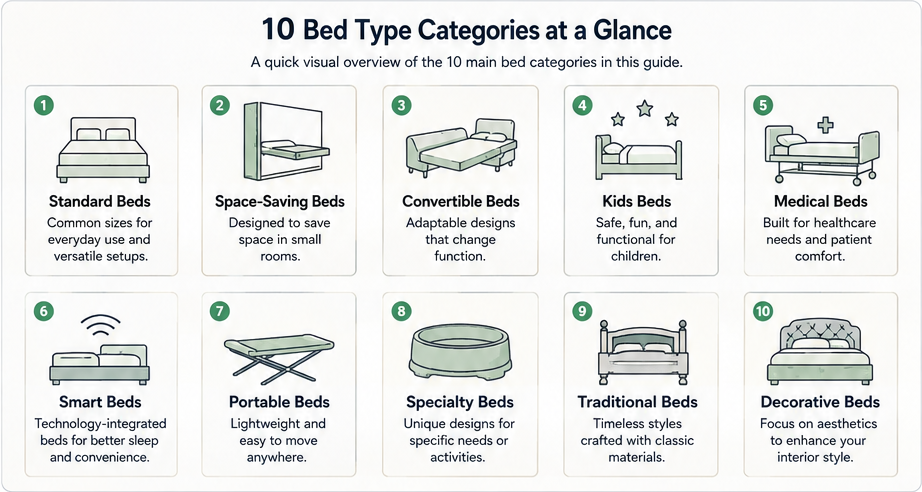
The 10 essential bed types differ primarily in how they use space, support the mattress, accommodate sleepers, provide functionality, and contribute to the bedroom environment. A primary classification is the category that best represents a bed’s dominant purpose even when the same bed shares attributes with another category.
What are Standard Beds and how do they function?
Among the 10 bed types, Standard Beds are conventional fixed bed structures designed to provide a permanent sleeping surface using a compatible mattress and support system. They prioritize straightforward everyday use rather than conversion, portability, medical positioning, integrated technology, or a specialized visual role.
Standard Beds can use multiple standard mattress sizes and different support systems when the mattress and frame are compatible. Their frames may use wood, engineered wood, metal, upholstery, or combinations of materials, so the category does not require one fixed construction material.
When to choose Space-Saving Beds for tight rooms
Among the 10 bed types, Space-Saving Beds are designed to reduce the amount of permanent floor area required for sleeping, making them suitable where room dimensions or multi-use layouts create space constraints. Their defining feature is structural space efficiency rather than one specific mattress size or material.
Space-Saving Beds use structural configuration to reduce permanent space demand, but the final footprint still depends on mattress dimensions, deployment area, access, and surrounding furniture. A design qualifies here when space reduction is its dominant purpose, even if it also converts or serves a child-focused room.
How Convertible Beds maximize multi-use spaces
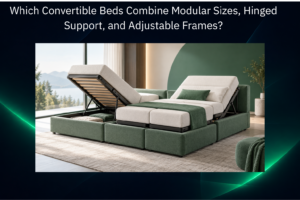
Among the 10 bed types, Convertible Beds use a structure that changes between sleeping and another functional configuration, allowing one piece of furniture to serve more than one room purpose. Conversion is the primary mechanism, while size, support, material, and hardware vary by design.
Repeated configuration changes make hardware, mattress support, and material selection important because these components must remain compatible with the conversion mechanism. A Convertible Bed may also save space, but it belongs here when changing function is more central than simply reducing floor area.
Evaluate Kids Beds for safety and vertical efficiency
Among the 10 bed categories, Kids Beds are structures designed around children’s dimensions, access needs, room use, and age-appropriate safety requirements. The category prioritizes child fit and safety; vertical efficiency applies only when a specific design uses elevated sleeping or bunk-style construction.
For children’s bunk beds, the U.S. Consumer Product Safety Commission requires at least two upper-bunk guardrails and states that the top of the guardrails must be at least 5 inches above the top of the mattress. These requirements apply to bunk-bed structures, not every Kids Bed.
Why Medical Beds are essential for health needs
Among the 10 bed categories, Medical Beds are specialized adjustable structures intended to support care, positioning, accessibility, or clinical needs that conventional fixed beds may not accommodate. Their defining attributes are care-oriented function, positional control, mattress fit, compatible rails or accessories, and safe bed-system integration.
The U.S. Food and Drug Administration defines a bed system as the bed frame, mattress, bed rails, and compatible accessories. It emphasizes dimensional compatibility because gaps can create entrapment, a condition in which a person becomes caught, trapped, or entangled in spaces around the mattress, rail, or frame.
Assess Smart Beds for integrated sleep technology
Among the 10 bed types, Smart Beds integrate electronic or connected functions into the bed system to provide adjustable, measurable, or automated features beyond a conventional fixed bed structure. Integrated technology is the defining characteristic, while the exact sensing, connectivity, adjustment, and automation features vary by model.
A 2022 Sensors study tested 45 participants using one smart-bed system against polysomnography and reported sleep-versus-wake classification accuracy of about 0.86. The authors were affiliated with Sleep Number Labs, so the result illustrates one validated implementation and does not establish that every Smart Bed provides equivalent sensing performance.
When to utilize Portable Beds for temporary setups
Among the 10 bed types, Portable Beds prioritize mobility, compact handling, and temporary deployment rather than permanent bedroom installation. Their defining structural attribute is ease of movement or setup, while mattress size, support method, and construction material vary according to the specific portable design.
Portable Beds suit temporary sleeping arrangements where transport, storage, or quick setup matters more than permanent furniture integration. Their dimensions should still provide adequate sleeping space while remaining consistent with the transport and storage requirements that define the category.
Identify Specialty Beds for unique sleeping arrangements
Among the 10 bed categories, Specialty Beds are purpose-specific bed designs created for sleeping arrangements or functional requirements that cannot be adequately classified under the other nine primary categories. The exclusion rule is essential: Specialty Beds are not a catch-all for designs that have not been classified carefully.
A bed belongs in Specialty only when its dominant sleeping arrangement or structural function does not fit Standard, Space-Saving, Convertible, Kids, Medical, Smart, Portable, Traditional, or Decorative Beds. Overlap alone does not justify Specialty classification when another category clearly captures the primary purpose.
What defines Traditional Beds in classic room styling?
Among the 10 bed types, Traditional Beds are defined by established furniture forms, conventional construction details, and design characteristics associated with classic bedroom styling. Their classification emphasizes established form and construction rather than integrated technology, mobility, conversion, or visual decoration alone.
Traditional Beds often use fixed structures and may use solid or engineered wood, but wood is not a mandatory material. A Traditional Bed may also be decorative; it remains primarily Traditional when its established furniture form matters more than its ornamental emphasis.
How Decorative Beds enhance bedroom aesthetics
Among the 10 bed types, Decorative Beds place greater emphasis on visible design features, materials, upholstery, detailing, or statement structure while still performing the primary function of a bed. Their defining attribute is visual emphasis rather than a specific support system, mattress size, or structural technology.
Decorative Beds may overlap with Traditional, Standard, or other categories, but they belong here when aesthetics dominate the classification. Upholstery, visible woodwork, metal detailing, or statement shapes may contribute to the design without determining the underlying mattress-support quality.
| Bed Category | Size Options | Support System | Material Options | Structure | Best For |
|---|---|---|---|---|---|
| Standard Beds | Multiple standard sizes; verify model | Platform, slats, compatible foundation, or other approved base | Wood, engineered wood, metal, upholstery, or combinations | Fixed permanent structure | General everyday bedroom use |
| Space-Saving Beds | Varies by design and room constraints | Integrated or compatible support; varies | Multiple options | Structure reduces permanent space demand | Tight rooms and multi-use layouts |
| Convertible Beds | Varies by converted configuration | Integrated or compatible support; varies | Wood, metal, upholstery, or combinations | Changes between sleeping and another function | Multi-use rooms |
| Kids Beds | Child or single-sleeper formats; varies by design | Compatible support appropriate to the design | Wood, engineered wood, metal, upholstery, or combinations | Child-focused structure; may use vertical space | Children’s rooms and age-appropriate use |
| Medical Beds | Model-specific | Integrated adjustable deck and compatible mattress system | Varies by medical bed system | Adjustable care-oriented structure | Positioning, accessibility, or care needs |
| Smart Beds | Model-specific | Fixed or adjustable integrated support; varies by model | Multiple options | Electronics or connected functions integrated into the bed | Automated, connected, or measurable functions |
| Portable Beds | Compact or single-oriented formats; varies | Temporary, foldable, or integrated support; varies | Multiple lightweight or transport-oriented options | Moveable, collapsible, or quick-deployment structure | Temporary sleeping setups |
| Specialty Beds | Purpose-specific | Depends on the specialized design | Depends on the specialized design | Unique structure not adequately classified elsewhere | Unusual sleeping arrangements or functions |
| Traditional Beds | Multiple standard sizes; verify frame | Compatible box spring, platform, slats, or foundation as required | Often wood; other materials possible | Fixed established furniture form | Classic bedroom styling |
| Decorative Beds | Multiple sizes; varies by design | Compatible support system | Upholstery, wood, metal, or combinations | Statement or ornament-focused structure | Bedrooms where visual emphasis is a primary requirement |
The category identifies the bed’s primary role, but the correct configuration still depends on size, support, material, and structural details.
Compare bed types by size category and dimensions
Bed types should be compared by size only after room dimensions, sleeper count, and the structural requirements of the chosen bed category have been established. Clearance is the usable open space around a bed required for movement, doors, drawers, furniture access, or other room functions.
The Sleep Foundation mattress shopping guide identifies six commonly available standard U.S. mattress sizes. Mattress dimensions describe size rather than bed category, and the complete bed frame can extend beyond the mattress footprint, so final room planning should use the actual manufacturer’s frame measurements.
| Size Name | Dimensions in Inches | Dimensions in Centimeters | Best For |
|---|---|---|---|
| Twin | 38 × 75 | approx. 97 × 191 | Single sleeper, child, compact room |
| Twin XL | 38 × 80 | approx. 97 × 203 | Single sleeper needing added length |
| Full | 54 × 75 | approx. 137 × 191 | Single sleeper wanting more width |
| Queen | 60 × 80 | approx. 152 × 203 | Couples or single sleepers wanting more space |
| King | 76 × 80 | approx. 193 × 203 | Couples wanting greater width |
| California King | 72 × 84 | approx. 183 × 213 | Couples or taller sleepers prioritizing length |
Exact mattress measurements can vary slightly by manufacturer, so confirm the product dimensions before purchase.
After choosing a mattress size, check how the full bed footprint fits your room size and layout before selecting the frame.
Assess single-sleeper dimensions for Portable or Kids beds
Within these bed types, single-sleeper dimensions should provide sufficient sleeping area while remaining compatible with the room footprint and structural purpose of Portable or Kids Beds. Twin measures about 38 × 75 inches, while Twin XL keeps the 38-inch width and extends length to about 80 inches.
Portable and Kids Beds do not require identical dimensions. The correct choice depends on the sleeper, room, transport or child-focused structure, and the frame’s total footprint beyond the mattress edge.
Evaluate multi-sleeper dimensions for Standard or Smart beds
Within these bed types, multi-sleeper dimensions require enough mattress width for the intended sleepers while preserving adequate room space for circulation and the structural features of Standard or Smart Beds. Queen measures about 60 × 80 inches, King 76 × 80 inches, and California King 72 × 84 inches.
Sleeper count sets the starting size requirement, while room clearance and frame features determine whether that size works in practice. Smart Beds do not use one universal size; the complete powered or connected structure may also add space beyond the mattress dimensions.
Once the correct dimensions are established, the next decision is whether the bed’s foundation properly supports the intended mattress.
Compare bed types by support system for optimal alignment
Across bed types, the correct bed support system depends on the mattress requirements, bed structure, desired support characteristics, and whether the bed needs fixed or adjustable positioning. Slat spacing is the distance between individual support slats beneath the mattress, and manufacturer rules should control the final support decision.
The Sleep Foundation describes platform, box spring, foundation, slatted, and adjustable support forms. A useful manufacturer-specific example comes from Tempur-Pedic, which permits certain slatted foundations when slats are at least 3 inches wide and less than 4 inches apart, while stating that traditional box springs are incompatible with its mattresses. Those measurements are not universal mattress-industry limits.
- If the mattress requires continuous or closely spaced support → choose a manufacturer-approved platform or base → result: reduce unsupported mattress areas and maintain compatibility.
- If the mattress manufacturer approves a separate box spring → use the specified foundation → result: keep the mattress and support system within the intended configuration.
- If the bed requires positional movement → confirm mattress and adjustable-base compatibility → result: allow the structure to move without creating a support mismatch.
Because a support system must work with both the mattress and the surrounding structure, verify bed frame compatibility before finalizing the foundation.
What are box spring support systems used for?
Among bed types that use separate foundations, box spring systems are units placed beneath compatible mattresses to provide support and elevate the sleeping surface within appropriate bed configurations. They should be used only when the mattress and bed structure are designed to work with that type of foundation.
The support function matters more than the historical use of box springs. Some mattresses remain compatible with them, while others do not; Tempur-Pedic, for example, states that traditional box springs are incompatible with its mattresses.
How platform bases provide solid support for Traditional beds
Among compatible bed types, platform bases support a mattress through a rigid deck or structured slat system, allowing some Traditional Beds to function without a separate box spring. A platform is a support form, not a top-level bed category, and its suitability depends on the mattress requirements.
A solid deck provides continuous support, while a slatted platform distributes support through individual slats. Traditional Beds may use either arrangement when the frame and mattress are compatible, but not every Traditional Bed uses a platform.
When to use adjustable bases for Medical or Smart beds
Among adjustable bed types, adjustable bases are appropriate when a Medical or Smart Bed requires controlled changes in sleeping position or integrates functions that depend on a movable foundation. The mattress must flex safely with the base, and the full bed system must remain compatible through its range of movement.
For Medical Beds, the FDA’s bed-system concept reinforces the need to treat the frame, mattress, rails, and accessories as compatible components. For consumer Smart Beds, available adjustment and electronics vary by model, so the movement mechanism should be evaluated separately from connected features.
If positional adjustment is part of the decision, review adjustable bed compatibility before choosing the mattress and base combination.
After support compatibility is established, material becomes the next major factor affecting construction, maintenance, durability, and appearance.
Compare bed types by material, durability, and aesthetics
Across bed types, bed materials influence construction strength, maintenance requirements, visual style, weight, and long-term suitability, but no single material is automatically best for every bed classification. Hygroscopic describes a material such as wood that exchanges moisture with surrounding air as relative humidity changes.
The USDA Forest Products Laboratory Wood Handbook explains that wood moisture content changes with surrounding relative humidity and temperature. As a narrow technical example, average longitudinal shrinkage from green to oven-dry conditions is about 0.1% to 0.2% for most species, while larger dimensional changes can occur in other grain directions and vary by species.
Material choice affects maintenance and long-term construction performance, so compare bed material quality before narrowing the frame material.
Compare solid wood vs. engineered wood for Standard beds
Among Standard bed types, solid wood and engineered wood can both be used in Standard Beds, but they differ in construction, weight, maintenance, appearance, and performance depending on the specific material and build quality. Neither material group should be treated as universally stronger or more durable without product-level evidence.
Good Fit: Solid or engineered wood can suit a Standard Bed when the construction quality, joints, support layout, finish, room conditions, and maintenance expectations match the intended use.
Poor Fit: A wood product becomes a weaker choice when moisture exposure, maintenance demands, damaged components, or inadequate construction do not suit the room or load requirements. Wood’s hygroscopic behavior makes environmental conditions part of the material decision.
Identify the benefits of metal constructions for Convertible beds
Among Convertible bed types, metal construction can suit Convertible Beds where the design requires relatively compact structural components, moving mechanisms, or repeated configuration changes. The benefit depends on the specific metal sections, joints, hardware, finish, and conversion design rather than on the word “metal” alone.
Good Fit: Metal can suit a convertible mechanism when the engineered frame, pivots, fasteners, and support geometry are designed for repeated movement and remain accessible for inspection or maintenance.
Poor Fit: Metal is a poor fit when the mechanism, joint design, corrosion protection, noise control, or mattress support does not match the intended conversion cycle and room conditions.
Why choose upholstered materials for Decorative beds
Among Decorative bed types, upholstered materials suit Decorative Beds when softness, texture, visual detail, or a finished statement appearance is a primary design requirement. Upholstery functions as a surface and design treatment; it does not by itself establish the strength or support quality of the underlying frame.
Good Fit: Upholstery suits a Decorative Bed when tactile comfort, color, texture, or visual emphasis matters and the fabric can be maintained under the household’s expected use.
Poor Fit: Upholstery is less suitable when cleaning demands, staining risk, dust accumulation, pet wear, or maintenance requirements conflict with the user’s priorities.
Size, support, material, and structure now provide enough information to combine the four factors into one final selection process.
How to choose a bed type using all four classification factors
Choosing the right bed type requires evaluating size, support system, material, and structure in a fixed sequence so that each decision remains compatible with the next. Compatibility is the ability of the selected mattress, support system, bed frame, dimensions, and functional features to work together without a fit, support, safety, or usability conflict.
The process uses eight steps. It applies the six standard U.S. mattress-size references from the Sleep Foundation, the manufacturer-specific support example from Tempur-Pedic, and the USDA material evidence already established above so each choice leads to a validated configuration rather than an isolated category label.
- Define the primary functional need. Decide whether the main requirement is conventional sleeping, space efficiency, conversion, child use, medical positioning, Smart functionality, portability, specialty use, traditional styling, or decorative emphasis. Result: you identify the purpose that should control classification.
- Select the most suitable category from the approved 10. If two categories overlap, assign the bed according to its dominant purpose rather than treating overlap as an error. Result: you establish the primary bed category before comparing attributes.
- Measure the usable room footprint. Include circulation, doors, drawers, furniture access, and any deployment space required by the structure. Result: you define the maximum practical bed footprint before choosing a final size.
- Choose the appropriate mattress and bed size. Use the verified Twin, Twin XL, Full, Queen, King, or California King dimensions as a reference and confirm the actual manufacturer’s measurements. Result: the mattress dimensions match the sleeper count and room constraints.
- Check the required support system. Confirm mattress and foundation compatibility using the manufacturer instructions; the Tempur-Pedic slat example shows why brand-specific requirements should not be converted into universal rules. Result: the mattress sits on an approved support system.
- Choose the construction material. Evaluate maintenance, room environment, appearance, weight, and structural requirements; account for wood’s moisture response where relevant. Result: the material suits both the design and the environment.
- Verify the structural features. Check adjustability, conversion, portability, storage interaction, child-safety features, or another function that defines the selected category. Result: the structure actually performs the job that justified the category choice.
- Validate the complete configuration. Confirm that category, size, support, material, mattress, room footprint, and structural features work together. Result: the final bed selection avoids a category-level choice that fails at the configuration level.
A final compatibility check prevents a technically suitable bed category from becoming a poor fit because of room, mattress, material, or structural constraints.
Avoid common pitfalls when selecting bed types and features
Avoid selecting a bed type before checking room dimensions, mattress compatibility, support requirements, structural access, and material suitability. Entrapment is a safety condition in which a person becomes caught, trapped, or entangled in an opening between parts of a bed system.
- Avoid choosing a bed type that exceeds the usable room footprint. Problem: the mattress may technically fit while the frame blocks circulation, doors, or essential furniture access. Correction: measure the full frame and required clearance before purchase.
- Avoid pairing a mattress with an incompatible support system. Problem: support requirements differ by manufacturer; Tempur-Pedic’s less-than-4-inch slat-spacing example applies to its own guidance, not every mattress. Correction: use the mattress manufacturer’s approved foundation specifications.
- Avoid choosing a structure that obstructs bedroom movement, doors, drawers, or necessary storage access. Problem: a structurally valid bed can make the room difficult to use when drawers, conversion paths, or circulation zones are blocked. Correction: test access around the full deployed structure before purchase.
If storage access is part of the room plan, compare bed storage options before choosing a structure that reduces usable space.
- Avoid selecting a material without considering local conditions and realistic maintenance requirements. Problem: wood exchanges moisture with surrounding air, while upholstery and metal create different cleaning or maintenance demands. Correction: match the material to humidity, cleaning expectations, household use, and the frame’s actual construction.
- Avoid treating elevated Kids Beds like ordinary low beds. Problem: bunk-style structures introduce guardrail and opening requirements that do not apply to every Kids Bed; CPSC rules require upper guardrails to extend at least 5 inches above the mattress. Correction: use the applicable CPSC bunk-bed requirements and the manufacturer’s mattress-thickness instructions for elevated designs.
- Avoid mixing Medical Bed components without verifying dimensional compatibility. Problem: incompatible mattress, rail, frame, or accessory combinations can create gaps and entrapment risk. Correction: follow FDA bed-system guidance and the manufacturer’s approved component dimensions.
Once these compatibility errors have been eliminated, the remaining decision can be confirmed with a simple final checklist.
Final checklist for selecting the perfect bed category combination
A bed category decision is ready to finalize when the selected type, dimensions, mattress support, material, and structural features have all been checked against the sleeper’s needs and available room space. Validation is the final process of checking that every part of the selected bed configuration satisfies the requirements established earlier in the decision process.
The 10 bed categories provide the primary classification, while size, support system, material, and structure provide the four cross-category attributes needed to verify the complete configuration. The correct bed category is the one whose complete configuration matches the sleeper, mattress, room, and intended function.
At Bedlufix, our bed-buying guidance focuses on matching category, size, support, material, and structure so readers can make informed compatibility decisions.
A confident bed choice comes from verifying how the complete configuration fits your sleeper needs, mattress, room, and intended function.
References
- Caggiari G, Talesa GR, Toro G, Jove E, Marongiu G, Puddu L. What type of mattress should be chosen to avoid back pain and improve sleep quality? Review of the literature. Journal of Orthopaedics and Traumatology. 2021.
- Danoff-Burg S, et al. Adjustable-base sleep study reported in SLEEP. 2022.
- Sleep Foundation. Mattress Size Guide and standard U.S. mattress dimensions.
- U.S. Consumer Product Safety Commission. 16 CFR Part 1513 and bunk bed safety guidance.
- U.S. Food and Drug Administration. Hospital Bed Safety guidance on bed-system compatibility and entrapment.
- Tempur-Pedic. Foundation and slat-support compatibility guidance.
- Sleep Foundation. Platform, box spring, and adjustable-base support guidance.
- Siyahjani F, et al. Smart-bed sensing validation study. Sensors. 2022.
- USDA Forest Products Laboratory. Wood Handbook: Wood as an Engineering Material.
- Bedlufix editorial taxonomy. Approved 10-category bed classification framework used in this article.

Mohamed Abdirahman Camay is the founder and lead content specialist at BedLuFix. He researches bed types, bed frames, mattress compatibility, sleep comfort, support systems, bedroom layouts, and key bed-buying factors. His research process includes reviewing manufacturer specifications, comparing product features and materials, and analyzing common consumer questions. He also develops practical bed calculators, comparison tools, checklists, and templates that simplify bed selection and bedroom planning. Mohamed creates clear guides and useful resources to help readers choose beds that suit their sleep needs, room size, lifestyle, and budget.