
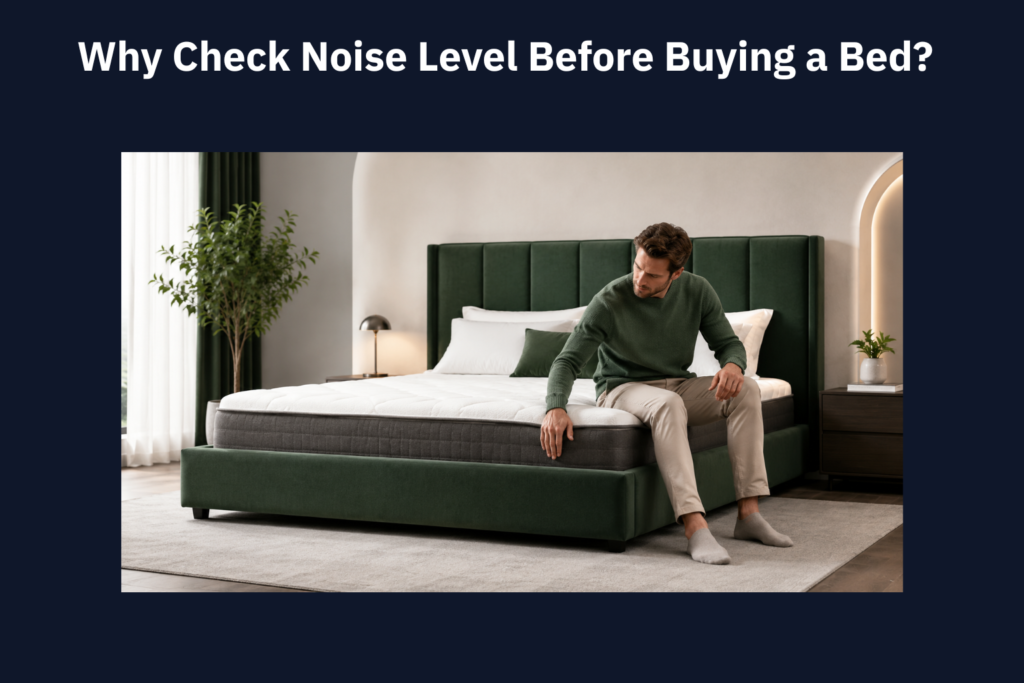
Why Check Noise Level Before Buying a Bed?
Bed noise from a mattress can disrupt sleep cycles and strain relationships; checking it before purchase ensures quiet, restorative sleep and better long‑term satisfaction.
How Bed Noise Affects Sleep Quality and Partner Satisfaction
Bed noise degrades sleep quality by triggering micro‑awakenings during light sleep stages, compounding over time into reduced deep sleep and increased next‑day fatigue. Understanding the sources of noise is the first step to evaluating them.
How audible noises trigger micro‑awakenings during light sleep stages
Audible mattress noise can contribute to brief arousals during lighter sleep, depending on the sound, its duration, the room environment, and the sleeper’s sensitivity. When a mattress squeaks or crinkles with each movement, the brain registers the sound even if the sleeper does not fully wake. Each micro‑awakening fragments the sleep architecture, reducing slow‑wave and REM sleep over the course of the night.
Intermittent environmental noise has been associated with more sleep disruption and next-day fatigue, although the effect varies by sound pattern and individual sensitivity. The key takeaway: a silent bed is not a luxury — it is a measurable contributor to sleep continuity.
Why partner disturbance from motion + noise can be greater than motion alone
Motion transfer on a noisy mattress compounds partner disturbance because the sound signals movement even when the sleeper does not feel the vibration. Dual stimulation — auditory and tactile — makes it far harder for the partner to remain asleep. When movement is accompanied by an audible cue, a sleeping partner may be more likely to notice the disturbance. Quiet mattresses, by contrast, reduce perceived disturbance because the auditory cue is absent. For side‑by‑side sleepers, noise acts as an amplifier of motion transfer, turning a minor shift into a fully disruptive event.
How noise expectations set by marketing vs. real‑world use create disappointment
Marketing materials often omit noise performance, creating a gap between expected quietness and real‑world acoustic behaviour after months of use. A memory foam mattress that starts silent may develop crinkling as low‑quality polyurethane degrades. Innerspring models may be quiet in the showroom but begin squeaking after two years. This post‑purchase dissonance leaves buyers frustrated.
Brands that clearly disclose noise testing, construction details, or applicable warranty terms can help buyers set more realistic expectations. When shopping online, always search for “noise” in customer reviews and note the time frame of complaints. A mattress that stays quiet for the first month may not stay quiet for the first year.
What Causes a Mattress to Be Noisy?
Mattress noise can originate from several common sources: internal material interactions, age‑related degradation, and the mattress–frame interface. Identifying the source helps you evaluate whether a noise is a deal‑breaker or a fixable issue.
Inner‑spring coils: squeaking from friction and age
Innerspring mattresses are the most common source of squeaking noise due to metal‑on‑metal or metal‑on‑foam friction as coil coatings wear over time. Coil gauge, pocketing, and overall construction quality determine how long a spring mattress stays quiet. Pocketed coils — where each spring is individually wrapped — reduce noise by preventing metal‑to‑metal contact. Even so, fabric pockets and surrounding materials can wear over time, allowing friction noise to emerge. Continuous coil systems may be more prone to audible friction when construction quality or support is weak. If you prefer an innerspring feel, look for quality pocketed coils with reinforced edge support.
Foam layers: degradation and how temperature affects crinkling
High‑density foam layers are generally silent, but low‑quality polyurethane foam can produce crinkling sounds as air pockets collapse and the material degrades over time. This “crinkling” can occur when foam, covers, liners, adhesives, or layer interfaces change with wear, sometimes influenced by temperature fluctuations. In colder rooms, foam can stiffen and produce audible cracks when weight is applied. Better-quality foam construction may resist wear-related noise longer than lower-quality foam. Latex is generally quiet because it contains no metal springs, although the cover, frame, or foundation may still create noise. Always check foam density specifications — cheap foam may save money upfront but cost you quiet sleep later.
Hybrid interfaces: friction between foam and coil layers
Hybrid mattresses combine foam comfort layers with a coil support core, and the interface between these materials can generate friction noise. When the foam layer shifts slightly against the coil unit — especially if the mattress is not properly constructed — a rubbing or creaking sound can occur. High‑quality hybrids use a transition layer or adhesive bonding to minimise this movement. If you are considering a hybrid, look for models with a continuous foam encasement that wraps the entire mattress, reducing internal shifting.
Mattress–frame contact: when the base introduces additional noise
Sometimes the mattress is not the culprit — the frame or foundation is. A mattress that rubs against a metal bed frame, loose slats, or an ill‑fitting box spring can produce squeaks and groans that seem to come from the mattress itself. Always test your mattress on the intended frame. Slatted bases should follow the mattress manufacturer’s spacing and support requirements to reduce movement and prevent damage. If using a box spring, ensure it is in good condition and matches the mattress size exactly.
How Does Noise Level Differ by Mattress Type?
Noise potential varies significantly by mattress type, with innerspring at the highest risk and latex at the lowest, though many factors influence actual performance.
| Type | Typical Noise Source | General Noise Potential | Long‑Term Trend |
|---|---|---|---|
| Innerspring | Coil friction | Higher | Increases with age |
| Memory foam | Usually minimal; cover or foundation may contribute | Low | Stays low |
| Latex | Usually minimal; foundation or cover may contribute | Low | Stays low |
| Hybrid | Layer friction | Low to moderate | May increase |
| Air | Pump / valve | Moderate during adjustment | Pump wears |
| Adjustable base | Motor / hinges | Moderate; varies by motor and frame quality | Varies by quality |
Innerspring: highest risk of squeaking over time
Innerspring mattresses carry the highest noise risk due to metal components. Even with pocketed coils, wear and tear eventually introduces squeaks. If you love the bounce of springs, prioritise pocketed designs with thick fabric encasements and judge replacement timing by support, comfort, condition, and noise rather than a fixed schedule.
Memory foam and latex: near‑silent unless low quality
Memory foam and latex are generally among the quietest options because they do not rely on metal springs. Lower-quality foam may develop crinkling as materials wear, while better-constructed foam and latex models are generally quieter over time.
Hybrid: moderate noise from internal layering
Hybrids sit in the middle. The foam‑to‑coil interface can generate friction, but quality construction keeps noise minimal. Look for hybrids with a foam encasement and transition layer to reduce internal movement.
Air beds: pump noise and valve hiss
Air beds produce noise from the pump during inflation and from valve hiss when adjusting firmness. Once set, they are generally quiet, but pump wear can increase noise over time.
Adjustable bases: separate noise from mechanised frame
Adjustable bases introduce motor and hinge noise. Motor and hinge noise varies by design, construction quality, operating position, and room conditions. If you plan to use an adjustable base, listen to the motor at different positions before buying.
How to Evaluate Noise Level Before Buying
Evaluating noise before purchase requires a combination of in‑store testing, online research, and a trial‑period strategy. Use the checklist below to systematically assess noise risk.
In‑store: press and roll to detect squeaks and crinkling
When testing in a store, press down firmly on different areas of the mattress — centre, edges, and corners — and listen for squeaking or crinkling. Simulate a partner rolling over by applying pressure to one side and listening from the other. Move your knees across the surface to mimic real‑world use. If the mattress makes noise in a quiet showroom, investigate whether the sound comes from the mattress, foundation, frame, or display setup before buying.
Online: search for “noise” in customer reviews and weighted complaints
Online reviews are a goldmine for noise information. Search for keywords like “squeak,” “crinkle,” “noise,” and “loud” within reviews. Pay attention to when the noise appeared — longer-term complaints can be more informative than very early reviews. Weight the volume of noise complaints against total reviews; a repeated pattern across multiple credible reviews may be a warning sign.
Trial period: test after 30 days when materials have settled
Many mattresses require an adjustment period. Assess noise throughout the trial while following the seller’s minimum-use and return requirements. Sleep on it in different positions and note any sounds. If noise develops during the trial, return the mattress and choose a quieter option.
Weighted criteria: assign noise a priority score relative to support, durability, budget
Noise is one factor among many. Use the 1-to-5 scale below as a personal prioritization tool rather than an evidence-based rating. Light sleepers and co-sleeping couples may choose a higher personal priority, while solo sleepers who tolerate background sound may choose a lower one. Balance noise priority against support, durability, pressure relief, and budget to make the best overall decision.
☐ Noise Evaluation Checklist
- ☐ Press mattress in multiple spots, listen for squeaking.
- ☐ Simulate partner roll: apply movement to one side and listen.
- ☐ Check review patterns: how many complaints mention noise after 1 year?
- ☐ Test mattress on the intended bed frame (slats vs. box spring).
- ☐ If adjustable base, listen to motor noise on different positions.
- ☐ Rate noise among your top 3 purchase criteria.
When Noise Level Should Be a Deal‑Breaker vs. a Minor Consideration
Noise is a deal‑breaker for light sleepers and co‑sleeping couples, but a minor consideration for those who sleep in separate rooms or use white noise.
How to trade off noise vs. support and pressure relief
If a mattress offers excellent support and pressure relief but has moderate noise, consider whether noise mitigation measures — such as a quieter bed frame, a mattress topper, or white noise — can bridge the gap. For most sleepers, support and comfort should dominate the decision, but noise becomes co‑equal when sleep sensitivity is high.
When a noisy but supportive mattress is acceptable
If you sleep alone, use earplugs or a white noise machine, or have a partner who is a deep sleeper, a slightly noisy mattress may be acceptable. Sleepers who require a very dark and quiet environment should prioritise quietness above all else. For everyone else, noise is one variable in a multi‑factor decision.
When noise is a non‑negotiable
Noise may be a high priority for side-by-side couples where one or both partners are light sleepers and for shift workers who sleep during noisier daytime hours. In these cases, prioritize quieter construction and test the complete mattress-and-frame setup before buying.
Personal Noise Priority Decision Matrix
| Sleep Profile | Noise Priority | Recommended Action |
|---|---|---|
| Side‑by‑side couple, light sleeper | 5 / 5 | Choose latex or high‑density memory foam |
| Solo sleeper, white noise user | 2 / 5 | Noise is minor; focus on comfort |
| Shift worker, daytime sleeper | 5 / 5 | Prioritise silent mattress + quiet frame |
| Deep sleeper, separate bedrooms | 1 / 5 | Noise irrelevant; optimise for support |
Final Checklist for a Quiet, Restful Bed Purchase
Before you buy a bed, remember that quietness is a practical attribute that can affect sleep continuity and partner comfort.
even low‑level sounds fragment sleep cycles, and the cumulative effect over months can significantly impact daytime function. Remind yourself to prioritise noise relative to your personal sleep environment. Foam and latex constructions are generally quieter, while spring-based models and poorly constructed hybrids may carry more noise risk.
Silence is golden — test before you invest.
Before buying, always test for audible noise and search for long‑term quiet reliability. Use the checklist in this guide, read reviews with a noise focus, and take full advantage of trial periods. Your sleep — and your partner’s — will thank you.

Mohamed Abdirahman Camay is the founder and lead content specialist at BedLuFix. He researches bed types, bed frames, mattress compatibility, sleep comfort, support systems, bedroom layouts, and key bed-buying factors. His research process includes reviewing manufacturer specifications, comparing product features and materials, and analyzing common consumer questions. He also develops practical bed calculators, comparison tools, checklists, and templates that simplify bed selection and bedroom planning. Mohamed creates clear guides and useful resources to help readers choose beds that suit their sleep needs, room size, lifestyle, and budget.